Published
Embroidery and direct-to-film (DTF) printing are the two main ways we brand uniforms at our Unanderra workshop. They suit different jobs, and the right choice for each garment affects how your uniforms look after months of wear.
How each method works
Embroidery stitches your logo into the fabric with thread. Before the first garment is stitched, your artwork is set up as a stitch file that tells the machine where every stitch goes.
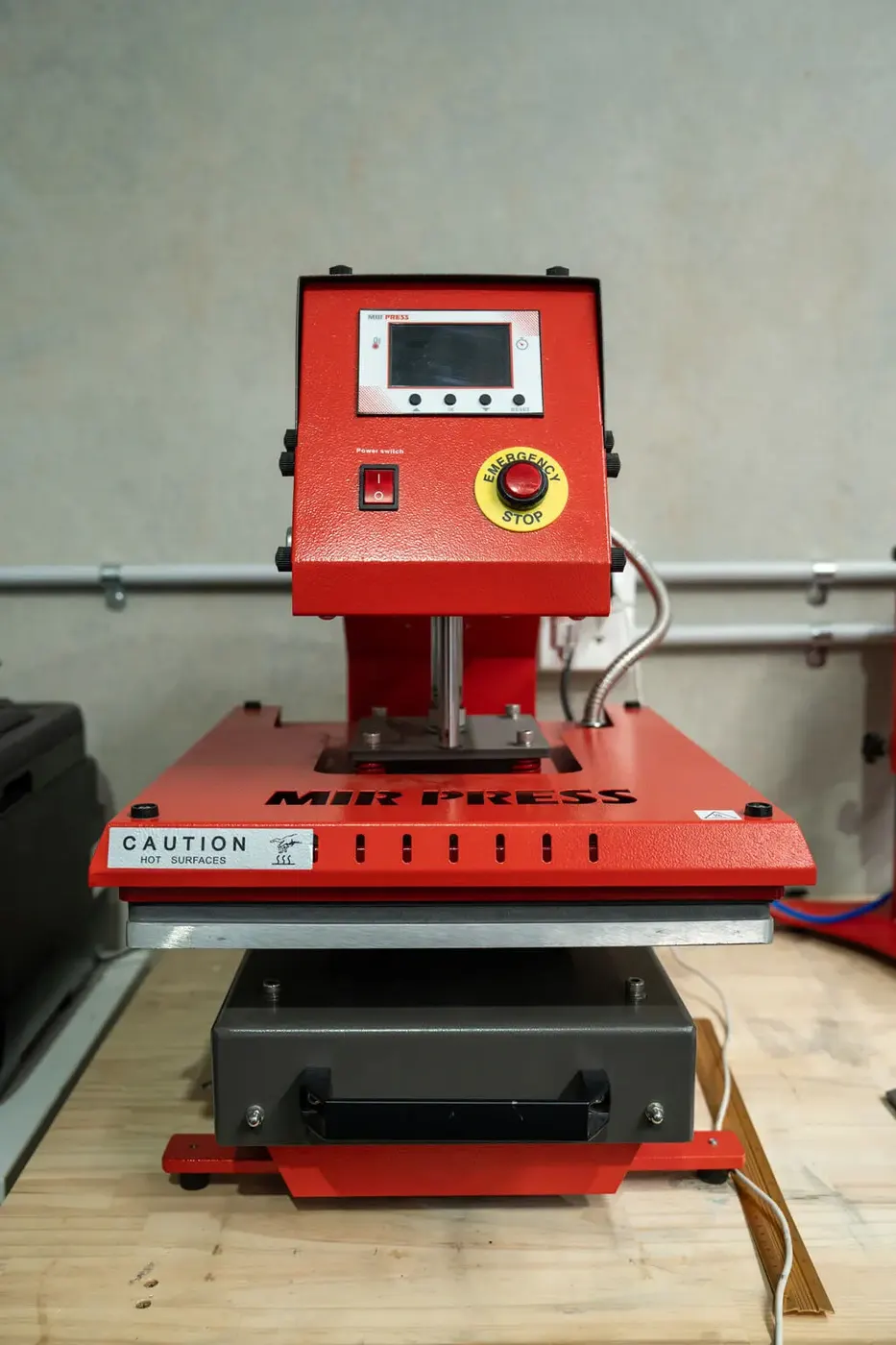
DTF printing puts your design onto a clear film, which is coated with an adhesive powder and cured. The transfer is then heat pressed onto the garment. Our DTF printing page has more detail.
Durability
Embroidery is hard to beat on garments that work hard. The thread becomes part of the garment, so there is nothing to crack or peel. That makes it the usual choice for polos, drill shirts, jackets and caps that are washed often and worn on site.
A DTF transfer sits on the surface of the fabric. It stays soft and flexible, and it holds up well to regular washing when it is pressed correctly and the garment's care label is followed.
Detail and colour
This is where DTF has the edge. It prints in full colour, so gradients, shading and fine lines all come through. A design with many colours prints as easily as one with two.
Embroidery works best with bold shapes and solid colours. Very fine lines and small text can fill in when they are stitched. If your logo has a lot of detail, our design team can simplify it for stitching while keeping it recognisable.
Fabric and garment type
Embroidery suits fabrics with some weight and structure. Pique polos, cotton drill, fleece, softshell jackets and caps all stitch well. On thin or stretchy fabric, heavy stitching can pucker.
DTF works on cotton, polyester, canvas, denim and blends, on both light and dark garments. It is a good match for tees, singlets and sports tops, where a stitched logo could pull the fabric.
Logo size and placement
Embroidery looks its best on smaller logos: the left chest, a sleeve or the front of a cap. As a design gets bigger, the number of stitches climbs. A large embroidered back design adds weight and stiffness to the garment.
Large prints across the back are usually better done as DTF. The transfer stays light and soft, even at a large size.
What drives the cost
Every job is quoted on its design and garments. These are the main things that affect the price.
For embroidery, logo size and the amount of detail matter most, because both add stitches. Each new design also needs to be set up as a stitch file before the first run.
For DTF, the size of the print matters most. Extra colours in the design do not add extra steps.
For both, the number of garments and the number of logo positions on each garment affect the total. Tell us the quantity and placements when you enquire and we will come back with pricing.
When to use each
Embroidery is usually the better fit for:
- Corporate polos and business shirts
- Jackets, fleece and softshells
- Caps and beanies
- Workwear that sees heavy use
DTF printing is usually the better fit for:
- Full-colour or highly detailed artwork
- Large back prints
- Event, club and promotional tees
- Lightweight or stretchy garments
You can use both
Many of our uniform orders combine the two. A common setup is an embroidered logo on the left chest and a DTF print across the back. You get a hard-wearing logo up front and full colour where there is room for it.
If you are unsure, send us your logo and tell us what you are decorating. We will recommend the method that suits each garment. See our embroidery page for more on stitching, or call 02 4228 3508.
Common questions
- Is embroidery or DTF printing more durable?
- Both last well on workwear when done properly. Embroidery is stitched into the fabric, so it handles heavy wear and frequent washing on polos, drill shirts and jackets. A DTF transfer bonds to the surface and stays soft and flexible, which suits tees and lightweight garments.
- Which method is better for a detailed, full-colour logo?
- DTF printing. It reproduces gradients, shading and fine lines that are hard to stitch. Embroidery works best with bold shapes and solid thread colours.
- Can I use embroidery and DTF printing on the same garment?
- Yes. A common setup is an embroidered logo on the left chest with a larger DTF print on the back. HTG Group does both in-house at its Unanderra workshop.